Layer palletizing

Layer palletizing is a high-speed and cost-effective palletizing solution designed to handle products in complete layers rather than individual items. This technology is especially suitable for high-volume, uniform products such as cartons, bags, shrink-wrapped packages, and trays.

IDEA’s layer palletizing systems are engineered to deliver stable, perfectly aligned pallets with consistent height and layer integrity. By palletizing full layers at once, the system achieves higher throughput, reduced mechanical complexity, and lower maintenance requirements compared to robotic solutions in certain applications. Layer palletizing is an ideal choice for manufacturers seeking maximum efficiency, reliability, and predictable performance in continuous production environments.

ITEM DETAIL
1. SYSTEM PERFORMANCE
  • Palletizing method: Full-layer palletizing

  • Throughput capacity: Up to 2,000–3,000 products/hour (application dependent)

  • Cycle time per layer: 2 – 6 seconds

  • Operation mode: Continuous, high-duty cycle (24/7)

  • System availability: > 98% (typical industrial operation)

2. PRODUCT HANDLING CAPABILITY
  • Supported products:

    • Cartons and boxes

    • Bags (rice, cement, fertilizer, powdered materials)

    • Shrink-wrapped bundles

    • Trays and rigid packages

  • Product weight per unit: 0.5 – 50 kg

  • Layer weight capacity: Up to 500 – 1,500 kg per layer

  • Product orientation: Fixed orientation per layer

  • Mixed SKU handling: Limited (batch-based)

3. LAYER FORMING & TRANSFER SYSTEM
  • Layer forming methods:

    • Infeed conveyor with layer accumulation

    • Push-type or pick-and-place layer transfer

  • Layer squaring and alignment unit included

  • Optional layer compression for bagged products

  • Layer separator insertion (paper, cardboard, plastic sheets)

4. PALLET SPECIFICATIONS
  • Pallet types: Wooden, plastic, metal

  • Standard pallet sizes:

    • 1,000 × 1,200 mm

    • 1,100 × 1,100 mm

  • Maximum pallet height: Up to 2,200 mm

  • Pallet pattern: Column or block stacking

  • Automatic pallet dispenser: Optional

5. CONTROL SYSTEM & AUTOMATION
  • PLC platform: Siemens / Allen-Bradley / Mitsubishi

  • HMI: Industrial touchscreen with recipe selection

  • Pallet pattern management via HMI

  • Automatic fault detection and alarm handling

  • Production counters and system diagnostics

6. CONVEYOR & PERIPHERAL EQUIPMENT
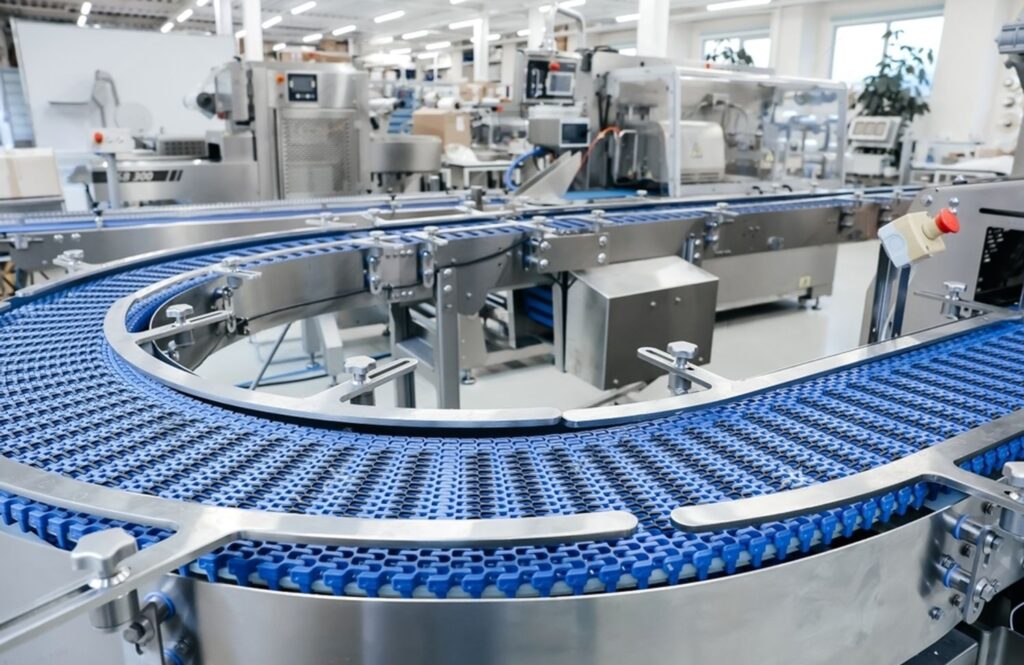
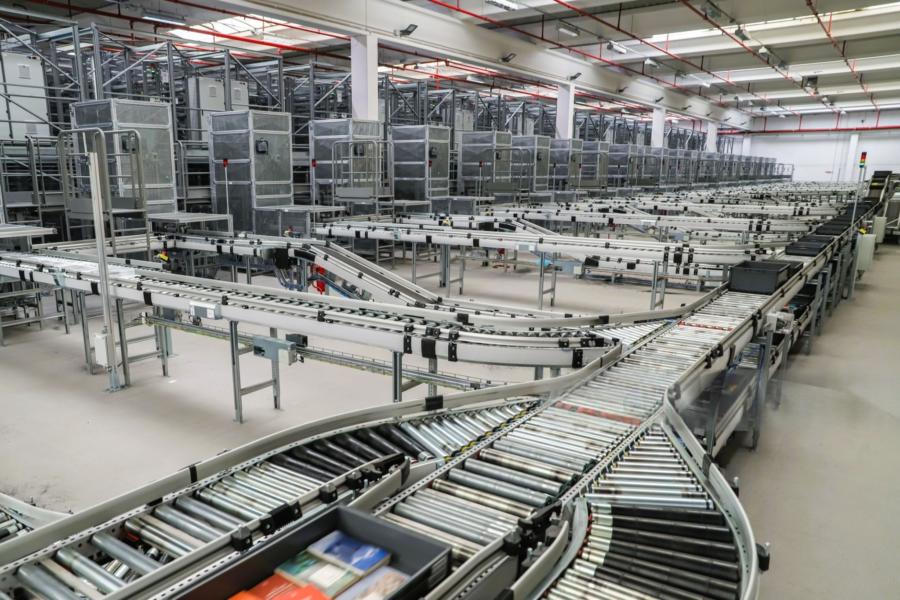
  • Infeed conveyors: Roller, belt, chain, modular plastic

  • Pallet conveyors: Roller or chain-driven

  • Pallet centering and positioning unit

  • Automatic empty pallet magazine (optional)

  • Integration with stretch wrapper or hooding machine

7. SAFETY & COMPLIANCE
  • Safety standards: CE, ISO 13849

  • Safety fencing with interlocked access doors

  • Emergency stop circuits

  • Light curtains or safety scanners (optional)

  • Safety PLC architecture (optional)

8. UTILITIES & OPERATING CONDITIONS
  • Power supply: 380–415 V / 50–60 Hz / 3-phase

  • Compressed air: 5–7 bar (if pneumatic actuators are used)

  • Operating temperature: 0 – 45 °C

  • Humidity: ≤ 85% RH (non-condensing)

Food & Beverage

Challenges and Transformation Trends in the Food and Beverage Industry The food and beverage industry is undergoing rapid transformation as regulations and market demands become increasingly stringent. However, many manufacturers still face critical challenges: Pressure on safety and quality: Strict regulations require tight control from raw materials to finished products. Low efficiency and high costs: […]
Learn More
Automotive

Challenges and Transformation Trends in the Automotive Industry The automotive industry is under constant pressure to deliver vehicles with absolute quality, safety, and performance. At the same time, manufacturers face several critical challenges: Demand for absolute quality: Every component must meet extremely high precision standards to ensure vehicle safety and reliability. Cost and production speed: […]
Learn More

Construction

Challenges and Transformation Trends in the Construction Industry The construction industry continues to face significant challenges as projects become more complex and demand higher efficiency and safety standards: Labor efficiency and safety: Heavy reliance on manual labor increases accident risks and leads to unstable productivity. Material quality and consistency: Traditional methods make it difficult to […]
Learn More

Manufacturing

Manufacturing Industry Trends and Challenges The manufacturing industry is facing rapid transformation driven by automation and digital technologies. However, many businesses in the manufacturing sector continue to encounter key challenges: Fragmented processes: Production data is scattered across different stages, limiting connectivity and making quality improvement difficult. Rising operating costs: Heavy reliance on manual labor or […]
Learn More